

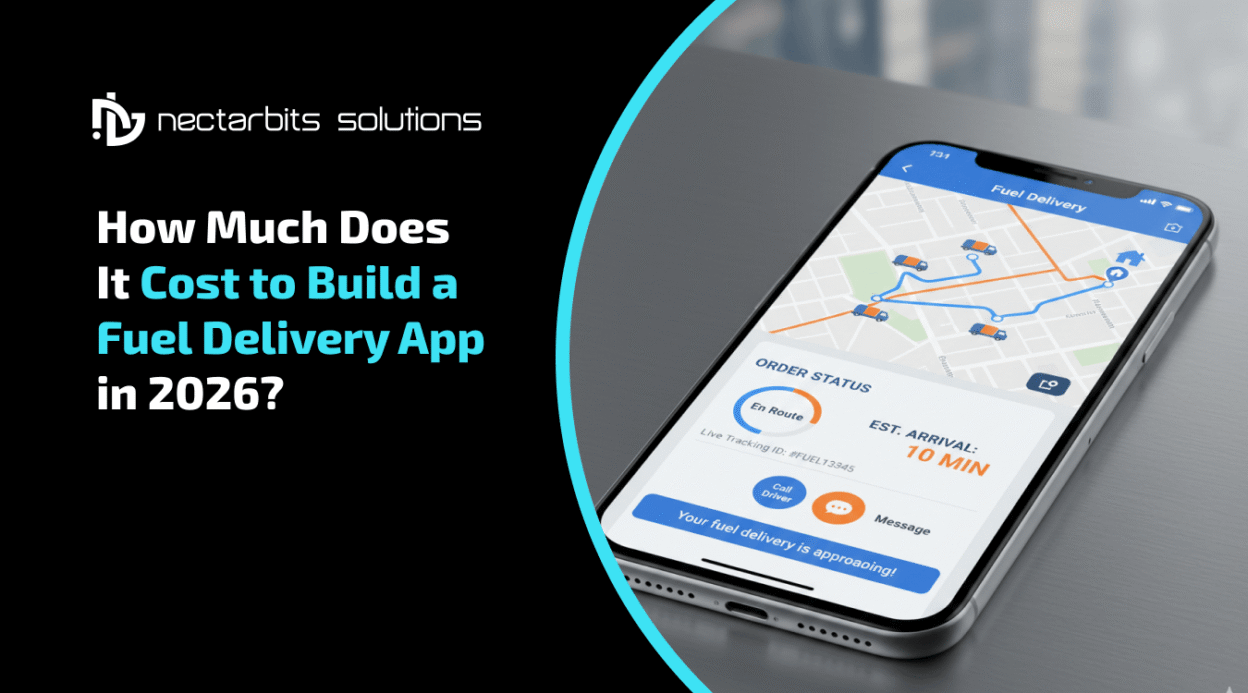
The on-demand economy has fundamentally transformed how consumers access everyday services—and fuel delivery is rapidly becoming the next big opportunity. Gone are the days when running out of gas meant an inconvenient trip to the station. Today’s consumers in Toronto, Vancouver, New York, Los Angeles, and cities across Canada and the USA expect convenience at their fingertips.
If you’re a fuel business owner, gas station operator, or entrepreneur looking to capitalize on this growing market, you’re likely asking the critical question: What’s the actual fuel delivery app development cost in 2026?
The answer isn’t straightforward. The cost to build a fuel delivery app in Canada USA varies significantly based on features, complexity, technology stack, and development approach. However, understanding the complete cost structure will help you make informed decisions and budget effectively for your digital transformation.
Quick Cost Overview:
- Basic MVP: $84,000 – $128,000
- Mid-Level Platform: $160,000 – $242,000
- Enterprise Solution: $320,000 – $508,000
In this comprehensive guide, we’ll break down every cost component, explore pricing models, reveal hidden expenses, and provide actionable insights specifically tailored for businesses operating in the Canadian and American markets.
Why Invest in Fuel Delivery App Development in 2026?
The Booming On-Demand Fuel Delivery Market
The on-demand fuel delivery market is experiencing unprecedented growth across North America. According to OpenPR Fuel Delivery Market, the global fuel delivery services market was valued at $5.2 billion in 2023 and is projected to reach $8.9 billion by 2030, growing at a CAGR of 7.8%.
Regional Market Highlights:
| Region | Market Growth Rate | Key Cities |
| Canada | 8.2% CAGR | Toronto, Vancouver, Calgary, Montreal |
| USA | 7.5% CAGR | New York, Los Angeles, Houston, Miami |
| North America Total | 7.8% CAGR | 50+ major metropolitan areas |
Consumer Demand for Convenience
A 2026 Statista survey revealed that 68% of North American consumers prefer on-demand services over traditional methods for everyday necessities. This behavioral shift creates massive opportunities for fuel businesses ready to embrace digital transformation.
Consumer Preferences by Region:
- Urban Canada (Toronto, Vancouver): 72% prefer mobile-first solutions
- US Metropolitan Areas: 65% willing to pay a premium for convenience
- Suburban Markets: Fastest-growing segment at 15% annual adoption increase
Business Benefits of Launching an On-Demand Fuel Delivery App
- Expanded Customer Reach: Serve customers beyond your physical location boundaries
- Increased Revenue Streams: Premium delivery fees, subscription models, and corporate contracts
- Competitive Advantage: Stand out in a traditional industry that is slow to adopt technology
- Data-Driven Insights: Understand customer behavior and optimize operations in real-time
- 24/7 Service Availability: Generate revenue around the clock without additional staff
- Scalable Growth: Expand to new cities without opening physical locations
Key Factors Affecting Fuel Delivery App Development Cost
Before diving into specific numbers, let’s explore the eight primary factors that influence your total investment when you build a fuel delivery app in Canada USA.
1. App Complexity and Feature Set
The sophistication of your app directly correlates with development costs. A basic MVP (Minimum Viable Product) costs significantly less than a full-featured platform with AI integration, predictive analytics, and IoT connectivity.
Complexity Levels:
| Level | Features | Timeline | Cost Range |
| Basic MVP | Core ordering, payment, tracking | 3-4 months | $84K-$128K |
| Standard | + Scheduling, loyalty, analytics | 5-7 months | $160K-$242K |
| Advanced | + AI, IoT, fleet management | 8-12 months | $320K-$508K |
2. Platform Selection Strategy
Your platform choice directly impacts both development costs and market reach:
Platform Options:
| Approach | Cost Impact | Best For |
| iOS Only | Baseline | Premium market focus (common in Canada) |
| Android Only | Baseline | Budget-conscious users, wider reach |
| Cross-Platform (React Native/Flutter) | 1.3x baseline | Best value for Canada/USA coverage |
| Native iOS + Android | 1.8-2x baseline | Maximum performance requirements |
Pro Tip for Canada & USA Markets: Cross-platform development using React Native or Flutter provides the best ROI, as both countries have roughly a 50/50 iOS-Android market split.
3. UI/UX Design Complexity
User interface and experience design significantly impact user adoption and retention:
- Template-Based Design: $5,000-$10,000
- Custom Brand Design: $12,000-$25,000
- Premium Custom + Animations: $25,000-$45,000
4. Technology Stack Selection
Your technology choices affect both upfront costs and long-term maintenance. A tech-enabled fuel delivery platform using modern frameworks may cost more initially, butit reduces technical debt.
5. Development Team Location and Structure
Hourly Development Rates by Region:
| Location | Hourly Rate (USD) | Quality Level | Communication |
| Canada (Toronto, Vancouver) | $100-$180/hour | Premium | Excellent |
| USA (Major Cities) | $120-$250/hour | Premium | Excellent |
| Eastern Europe | $50-$100/hour | High | Good |
| India/Asia | $25-$50/hour | Variable | Moderate |
Why Choose Canadian Development? Same timezone collaboration, understanding of local regulations (TDG Act), bilingual capabilities (English/French), and proximity to US markets make Canadian developers ideal for North American fuel delivery apps.
6. Third-Party API Integrations
Essential integrations add to development costs but are critical for functionality:
| Integration | Purpose | Cost Range |
| Payment Gateways (Stripe, Square) | Process transactions | $3,000-$6,000 |
| Google Maps/Mapbox | Navigation & tracking | $4,000-$8,000 |
| Twilio (SMS/Voice) | Notifications | $2,000-$4,000 |
| Firebase | Push notifications | $1,500-$3,000 |
| Analytics (Mixpanel) | User insights | $2,000-$4,000 |
7. Regulatory Compliance Requirements
Fuel delivery apps in Canada and the USA must meet strict compliance standards:
Canadian Requirements:
- Transportation of Dangerous Goods Act (TDG)
- Provincial fuel transportation regulations
- PIPEDA (data privacy)
- Bilingual requirements (Quebec)
US Requirements:
- DOT (Department of Transportation) regulations
- EPA environmental standards
- State-specific fuel handling requirements
- CCPA (California) / State privacy laws
Compliance Implementation Cost: $10,000-$25,000
8. Security Implementation
Security isn’t optional for apps handling payments and personal data:
| Security Feature | Cost Range | Requirement Level |
| SSL/TLS Encryption | $1,000-$2,000 | Mandatory |
| PCI DSS Compliance | $5,000-$10,000 | Mandatory for payments |
| Data Encryption (at rest) | $3,000-$5,000 | Highly recommended |
| Penetration Testing | $5,000-$15,000 | Recommended |
| Two-Factor Authentication | $2,000-$4,000 | Recommended |

Essential Features and Their Development Costs
A successful delivery app development project requires multiple panels serving different user types. Let’s examine the cost of building a doorstep fuel delivery app by component.
Customer App Features & Costs
The customer-facing app is your primary revenue driver. Here’s what each feature costs:
| Feature | Description | Cost Range (USD) | Priority |
| User Registration/Login | Social media, email, phone authentication | $2,000-$4,000 | Must-have |
| Real-time GPS Tracking | Live driver location tracking | $5,000-$8,000 | Must-have |
| Fuel Type Selection | Gas, diesel, premium, EV charging | $1,500-$3,000 | Must-have |
| Quantity Selection | Gallons/liters with price calculator | $1,000-$2,000 | Must-have |
| Schedule Delivery | Immediate or future booking | $3,000-$5,000 | Must-have |
| Multiple Payment Options | Cards, wallets, Apple Pay, Google Pay | $4,000-$7,000 | Must-have |
| Order History | Past transactions & receipts | $2,000-$3,500 | Must-have |
| Push Notifications | Order updates, promotions | $2,500-$4,000 | Must-have |
| Ratings & Reviews | Driver & service feedback | $2,000-$4,000 | Should-have |
| Loyalty Programs | Points, rewards, referrals | $3,000-$6,000 | Should-have |
| Multi-Vehicle Profiles | Manage multiple vehicles | $2,500-$4,500 | Nice-to-have |
| Fuel Price Comparison | Compare rates across providers | $3,500-$6,000 | Nice-to-have |
Total Customer App Estimate: $26,000-$46,500
Driver/Delivery Partner App Features & Costs
| Feature | Description | Cost Range (USD) | Priority |
| Driver Registration | Profile, documents, verification | $2,500-$4,000 | Must-have |
| Accept/Reject Orders | Manage incoming requests | $2,000-$3,500 | Must-have |
| Route Optimization | AI-powered best path calculation | $5,000-$9,000 | Must-have |
| Earnings Dashboard | Track income, tips, bonuses | $3,000-$5,000 | Must-have |
| In-App Navigation | Turn-by-turn directions | $4,000-$7,000 | Must-have |
| Delivery Proof | Photo capture, digital signature | $2,500-$4,000 | Must-have |
| Availability Toggle | Online/offline status control | $1,500-$2,500 | Must-have |
| Fuel Level Tracking | Monitor truck inventory | $3,000-$5,000 | Should-have |
| Safety Checklist | Pre-delivery compliance check | $2,000-$3,500 | Should-have |
| Emergency SOS | One-tap emergency assistance | $1,500-$3,000 | Should-have |
Total Driver App Estimate: $20,500-$35,000
Admin Panel Features & Costs
| Feature | Description | Cost Range (USD) | Priority |
| Dashboard Analytics | Real-time KPIs & metrics | $6,000-$10,000 | Must-have |
| User Management | Customer & driver administration | $4,000-$7,000 | Must-have |
| Order Management | Track, modify, cancel orders | $5,000-$8,000 | Must-have |
| Dynamic Pricing | Surge pricing, discounts, promotions | $3,500-$6,000 | Must-have |
| Payment Management | Transactions, refunds, payouts | $4,000-$6,500 | Must-have |
| Report Generation | Custom business reports, exports | $4,500-$7,500 | Must-have |
| Driver Verification | Background check integration | $3,000-$5,000 | Must-have |
| Content Management | Update app content, FAQs | $3,000-$5,000 | Should-have |
| Notification Center | Bulk push notifications | $2,500-$4,000 | Should-have |
| Geofencing | Service area management | $4,000-$7,000 | Should-have |
| Inventory Management | Fleet fuel level tracking | $5,000-$8,000 | Should-have |
| Multi-Location Support | Manage multiple cities/regions | $6,000-$10,000 | Nice-to-have |
Total Admin Panel Estimate: $35,500-$59,000
Total Cost Breakdown by App Complexity Level
Option 1: Basic MVP Fuel Delivery App
Ideal For: Startups testing market viability, single-city operations
Development Timeline: 3-4 months
Team Size: 4-6 members
| Component | Cost Range (USD) |
| UI/UX Design | $8,000-$12,000 |
| Customer App (iOS + Android) | $18,000-$25,000 |
| Driver App | $12,000-$18,000 |
| Admin Panel | $20,000-$30,000 |
| Backend Development | $15,000-$25,000 |
| Quality Assurance | $6,000-$10,000 |
| Project Management | $5,000-$8,000 |
Total MVP Investment: $84,000-$128,000
Included Features:
- Basic user registration
- Order placement & tracking
- Single payment gateway
- Push notifications
- Basic admin dashboard
Option 2: Mid-Level Fuel Delivery Platform
Ideal For: Established fuel businesses expanding digitally, multi-city operations in Canada or the USA
Development Timeline: 5-7 months
Team Size: 7-10 members
| Component | Cost Range (USD) |
| Advanced UI/UX Design | $15,000-$22,000 |
| Customer App (Enhanced) | $30,000-$45,000 |
| Driver App (Enhanced) | $22,000-$35,000 |
| Admin Panel (Advanced) | $35,000-$50,000 |
| Backend Development | $28,000-$40,000 |
| Third-Party Integrations | $10,000-$18,000 |
| Quality Assurance | $12,000-$20,000 |
| Project Management | $8,000-$12,000 |
Total Mid-Level Investment: $160,000-$242,000
Additional Features:
- Everything in MVP
- Scheduled deliveries
- Multiple payment options
- Loyalty program
- Advanced analytics
- Route optimization
- Multi-vehicle support
Option 3: Enterprise-Grade Fuel Delivery Solution
Ideal For: Large fuel companies, franchise operations, multi-province/multi-state expansion across Canada and the USA
Development Timeline: 8-12 months
Team Size: 12-15 members
| Component | Cost Range (USD) |
| Premium UI/UX Design | $25,000-$40,000 |
| Customer App (Full-Featured) | $50,000-$75,000 |
| Driver App (Full-Featured) | $35,000-$55,000 |
| Admin Panel (Comprehensive) | $55,000-$80,000 |
| Advanced Backend Architecture | $45,000-$70,000 |
| AI/ML Integration | $20,000-$35,000 |
| IoT Integration (Tank Sensors) | $15,000-$25,000 |
| Advanced Analytics & BI | $12,000-$20,000 |
| Security Implementation | $10,000-$18,000 |
| Third-Party Integrations | $18,000-$30,000 |
| Quality Assurance | $20,000-$35,000 |
| Project Management | $15,000-$25,000 |
Total Enterprise Investment: $320,000-$508,000
Premium Features:
- Everything in Mid-Level
- AI-powered demand forecasting
- IoT tank level monitoring
- White-label capabilities
- API for B2B integrations
- Advanced fraud detection
- Multi-language support
- Custom reporting engine

Hidden Costs You Must Budget For
Many businesses focus solely on development costs and face budget overruns. Here are the critical hidden costs that affect your total fuel delivery app development cost:
1. Annual Maintenance & Updates (15-20% of Development Cost)
Post-launch maintenance includes bug fixes, OS updates (iOS/Android release cycles), security patches, and feature enhancements.
| App Level | Annual Maintenance Cost |
| MVP | $12,600-$25,600/year |
| Mid-Level | $24,000-$48,400/year |
| Enterprise | $48,000-$101,600/year |
2. Cloud Hosting & Server Infrastructure
Cloud costs scale with your user base:
| Growth Stage | Monthly Users | Monthly Cost |
| Launch Phase | 0-1,000 | $100-$500 |
| Growth Phase | 1,000-10,000 | $500-$2,000 |
| Scale Phase | 10,000-50,000 | $2,000-$5,000 |
| Enterprise | 50,000+ | $5,000-$15,000+ |
Recommended Providers for Canada/USA:
- AWS (Amazon Web Services): Best for scalability, has Canadian data centers
- Google Cloud Platform: Strong AI/ML capabilities
- Microsoft Azure: Excellent for enterprise integrations
3. Third-Party Service Subscriptions
| Service | Monthly Cost | Annual Total |
| Payment Gateway Fees | 2.9% + $0.30/transaction | Variable |
| SMS Notifications (Twilio) | $200-$800 | $2,400-$9,600 |
| Push Notifications (Firebase/OneSignal) | $100-$500 | $1,200-$6,000 |
| Maps API (Google Maps) | $200-$1,000 | $2,400-$12,000 |
| Analytics (Mixpanel/Amplitude) | $100-$500 | $1,200-$6,000 |
| Customer Support (Zendesk/Intercom) | $150-$600 | $1,800-$7,200 |
Estimated Monthly Third-Party Total: $750-$3,400
Estimated Annual Third-Party Total: $9,000-$40,800
4. Marketing & User Acquisition
According to the industry, customer acquisition costs for on-demand apps:
| Market | Cost Per Install | Cost Per Active User |
| Canada | $2.50-$5.00 | $15-$35 |
| USA | $3.00-$7.00 | $20-$50 |
Launch Marketing Budget Recommendations:
| Market Size | Initial Marketing Budget | Expected Users |
| Single City (Toronto/LA) | $25,000-$50,000 | 1,000-2,500 |
| Regional (Ontario/California) | $75,000-$150,000 | 5,000-10,000 |
| National (Canada or USA) | $200,000-$500,000 | 15,000-50,000 |
5. Legal, Licensing & Compliance
| Requirement | Cost Range | Frequency |
| Business Licenses & Permits | $2,000-$10,000 | One-time + annual renewals |
| Legal Consultation | $5,000-$15,000 | Initial setup |
| Terms of Service & Privacy Policy | $1,500-$5,000 | One-time + updates |
| Insurance (Liability, Commercial Auto) | $15,000-$50,000 | Annual |
| TDG Compliance (Canada) | $3,000-$8,000 | Annual certification |
| DOT Compliance (USA) | $5,000-$12,000 | Annual certification |
6. Team Training & Onboarding
| Training Component | Cost Range |
| Admin Team Training | $2,000-$5,000 |
| Driver Onboarding Program | $3,000-$8,000 |
| Customer Support Training | $2,000-$4,000 |
| Safety & Compliance Training | $3,000-$6,000 |
Total Training Investment: $10,000-$23,000
Complete First-Year Budget Calculator
Here’s a realistic first-year budget for a mid-level fuel delivery app launching in Canada or the USA:
| Expense Category | Cost Range |
| App Development | $160,000-$242,000 |
| Cloud Hosting (Year 1) | $6,000-$18,000 |
| Third-Party Services | $9,000-$40,800 |
| Marketing & UA | $50,000-$150,000 |
| Legal & Compliance | $15,000-$35,000 |
| Insurance | $15,000-$50,000 |
| Training | $10,000-$23,000 |
| Contingency (10%) | $26,500-$55,880 |
Total First-Year Investment: $291,500-$614,680
Cost-Saving Strategies That Actually Work
Working with an experienced Mobile App Development Company can help you implement these proven cost-reduction strategies:
1. Start with a Strategic MVP
Savings: 40-50% on initial development
Launch with core features, validate your business model, gather user feedback, then iterate. Many successful apps launched with just 30% of their current features.
MVP Feature Prioritization Matrix:
| Priority | Features to Include | Features to Defer |
| P0 (Launch) | Registration, ordering, payment, tracking | – |
| P1 (Month 2-3) | Scheduling, notifications | Loyalty programs |
| P2 (Month 4-6) | Reviews, order history | AI recommendations |
| P3 (Month 6+) | Loyalty, referrals | Advanced analytics |
2. Choose Cross-Platform Development
Savings: 30-40% vs. native development
Frameworks like React Native and Flutter allow building for iOS and Android simultaneously with a 70-80% shared codebase.
3. Leverage White-Label Solutions
Savings: 50-60% vs. fully custom builds
For businesses prioritizing speed to market, white-label solutions provide a solid foundation that can be easily customized.
4. Implement Agile Development
Savings: 15-25% through reduced waste
Agile methodology ensures resources focus on features delivering the most value, with continuous feedback loops preventing expensive rework.
5. Optimize Third-Party Selections
Savings: $5,000-$15,000/year
| Service | Premium Option | Cost-Effective Alternative |
| Maps | Google Maps ($$$) | Mapbox ($$) or OpenStreetMap ($) |
| SMS | Twilio ($$$) | AWS SNS ($$) |
| Analytics | Mixpanel ($$$) | Firebase Analytics (Free) |
6. Consider Nearshore Development
Savings: 20-40% while maintaining quality
Canadian companies can leverage nearshore partners in Latin America; US companies can work with Canadian developers for timezone alignment and cost benefits.
ROI Analysis & Revenue Models
Understanding your potential return helps justify the fuel delivery app development cost.
Revenue Streams for Fuel Delivery Apps
| Revenue Model | Description | Potential Revenue |
| Delivery Fees | $5-$15 per delivery based on distance | $8-12 average |
| Fuel Markup | 5-15% margin on fuel prices | Variable |
| Subscription Plans | Monthly plans ($29-$99) | $50 avg/subscriber |
| Surge Pricing | 1.5-2x during peak demand | #ERROR! |
| Corporate Contracts | B2B fleet fueling agreements | $5,000-$50,000/month |
| Advertising | In-app promotions for partners | $500-$5,000/month |
Projected Revenue Scenarios
Scenario: Mid-Sized City Launch (Population 500,000-1M)
| Metric | Month 6 | Month 12 | Month 24 |
| Active Users | 2,500 | 8,000 | 20,000 |
| Monthly Orders | 5,000 | 20,000 | 60,000 |
| Avg. Order Value | $45 | $48 | $52 |
| Monthly Revenue | $50,000 | $210,000 | $520,000 |
| Monthly Profit (Est.) | -$15,000 | $45,000 | $180,000 |
ROI Timeline Expectations
Based on industry data:
| Milestone | Typical Timeline |
| Break-even | 18-24 months |
| Positive ROI | 24-36 months |
| 100% ROI | 36-48 months |
| Annual ROI (at maturity) | 35-65% |
Choosing the Right Development Partner
Your development partner significantly impacts both cost and success. Here’s what to evaluate:
Essential Evaluation Criteria
| Criteria | Why It Matters | Questions to Ask |
| Industry Experience | Understands unique fuel delivery challenges | “How many on-demand/logistics apps have you built?” |
| Regional Expertise | Knows Canada/USA regulations | “Are you familiar with TDG/DOT compliance?” |
| Portfolio Quality | Demonstrates capability | “Can you share similar project case studies?” |
| Technical Stack | Affects scalability & maintenance | “What technologies do you recommend and why?” |
| Communication | Critical for remote collaboration | “What’s your communication cadence?” |
| Post-Launch Support | Apps require ongoing care | “What does your maintenance package include?” |
| Pricing Transparency | Avoid surprise costs | “Can you provide detailed cost breakdowns?” |
Red Flags to Watch For
- Quotes significantly below market rates (quality concerns)
- No portfolio or references available
- Unclear project timeline or milestones
- No mention of testing/QA process
- Reluctance to sign an NDA or contract
- No post-launch support options
Recommended Technology Stack for 2026
Frontend Development
| Component | Recommended Options | Why |
| Mobile (Cross-Platform) | React Native, Flutter | Cost-effective, excellent performance |
| Mobile (Native) | Swift (iOS), Kotlin (Android) | Maximum performance needs |
| Admin Web Panel | React.js, Vue.js, Angular | Rich admin features |
Backend Development
| Component | Recommended Options | Why |
| Server Framework | Node.js, Python (Django), Ruby on Rails | Scalable, well-supported |
| Database | PostgreSQL (primary), MongoDB (logs), Redis (cache) | Reliable, performant |
| Cloud Platform | AWS, Google Cloud, Azure | Canadian data centers available |
Essential Third-Party Integrations
| Category | Recommended Services |
| Payments | Stripe, Square, PayPal |
| Maps & Navigation | Google Maps Platform, Mapbox |
| Communications | Twilio, Firebase Cloud Messaging |
| Analytics | Mixpanel, Amplitude, Google Analytics |
| Customer Support | Zendesk, Intercom, Freshdesk |
Compliance & Safety: Canada vs. USA Requirements
Canadian Compliance Requirements
| Requirement | Description | Implementation Cost |
| TDG Act | Transportation of Dangerous Goods compliance | $5,000-$10,000 |
| Provincial Regulations | Varies by province (ON, BC, AB, QC) | $3,000-$8,000 |
| PIPEDA | Personal data protection | $2,000-$5,000 |
| Bilingual Support | Required for Quebec operations | $5,000-$12,000 |
| Environmental Standards | Spill prevention, containment | $3,000-$6,000 |
US Compliance Requirements
| Requirement | Description | Implementation Cost |
| DOT Regulations | Federal transportation requirements | $5,000-$12,000 |
| EPA Standards | Environmental protection compliance | $3,000-$8,000 |
| State-Specific Rules | Varies significantly by state | $5,000-$15,000 |
| CCPA/State Privacy | Data privacy (especially California) | $3,000-$7,000 |
| OSHA Requirements | Worker safety standards | $2,000-$5,000 |
Insurance Requirements (Both Markets)
| Insurance Type | Annual Cost Range | Coverage |
| General Liability | $5,000-$15,000 | Third-party bodily injury, property damage |
| Commercial Auto | $8,000-$25,000 | Vehicle accidents, fuel spills |
| Product Liability | $3,000-$10,000 | Fuel quality issues |
| Cyber Liability | $2,000-$8,000 | Data breaches |
| Workers’ Compensation | $5,000-$15,000 | Employee injuries |
Conclusion: Making the Right Investment Decision
The fuel delivery app development cost in 2026 ranges from $84,000 for a basic MVP to over $500,000 for an enterprise-grade solution. When factoring in first-year operational costs, businesses should budget $291,500-$614,680 for a comprehensive market entry.
While this represents a significant investment, the on-demand fuel delivery market’s growth trajectory, $8.9 billion by 2030, makes it a compelling opportunity for forward-thinking fuel businesses in Canada and the USA.
Key Takeaways
- Start Strategically: An MVP approach minimizes risk and validates your business model before heavy investment
- Plan Comprehensively: Account for hidden costs, including maintenance, hosting, marketing, and compliance
- Choose Wisely: Your development partner significantly impacts both cost and quality—prioritize experience and transparency
- Think Long-Term: Focus on scalability and ROI rather than just minimizing initial costs
- Stay Compliant: Factor in TDG (Canada) and DOT (USA) regulatory requirements from day one
- Localize Your Approach: Consider regional preferences, payment methods, and language requirements for your target markets
The businesses that invest now in quality fuel delivery platforms will establish market leadership positions that become increasingly difficult for competitors to challenge.
Remember: The cheapest option isn’t always the best value. Focus on building a platform that will scale with your business and deliver exceptional user experiences that drive retention and word-of-mouth growth.
Ready to Learn More?
Continue Your Research: Dive deeper into the technical aspects of fuel delivery app development with our comprehensive guide on Technology Stack Considerations for On-Demand Fuel Delivery Apps. Learn about architecture decisions, security frameworks, and scalability considerations that ensure your platform performs reliably as your business grows across Canada and the USA.
About NectarBits
NectarBits is a leading Mobile App Development Company specializing in on-demand delivery solutions for businesses across Canada and the USA. With over a decade of experience building scalable, user-centric applications, we help fuel businesses transform their operations through innovative technology solutions.
Our Expertise:
- 50+ on-demand apps delivered
- Clients across Toronto, Vancouver, New York, Los Angeles, and beyond
- Full compliance with Canadian and US regulations
- End-to-end development and support services
Contact Us | View Our Portfolio
FAQs:
1. How much does fuel delivery app development cost in 2026?
The fuel delivery app development cost ranges from $84,000 to $508,000, depending on app complexity, features, platform (iOS/Android), and compliance requirements in Canada and the USA.
2. What factors affect the cost to build a fuel delivery app in Canada and the USA?
Key factors include app features, UI/UX design, tech stack, third-party integrations, regulatory compliance (TDG/DOT), security implementation, and development team location.
3. How long does it take to build a fuel delivery app?
A basic MVP takes 3–4 months, a mid-level platform takes 5–7 months, and an enterprise-grade solution can take 8–12 months.
4. What is the ongoing maintenance cost of a fuel delivery app?
Annual maintenance typically costs 15–20% of the total development cost, covering updates, security patches, hosting, and performance optimization.