

Quick Summary:
Unlock the Power of AI for Mid-Market Firms in Winnipeg
This blog explores how strategic AI consulting helps Canadian mid-market businesses:
- Streamline operations: Automate workflows and boost efficiency.
- Enhance customer experience: Use generative AI for faster, smarter support.
- Make data-driven decisions: Leverage predictive insights for sales and marketing.
- Implement custom AI solutions: Tailored software and intelligent automation.
- Follow a strategic roadmap: From assessment and pilots to scaling and optimization.
With the right guidance, AI becomes a strategic enabler, driving measurable ROI, productivity, and long-term growth.
As we enter 2026, artificial intelligence has become a critical driver of business transformation, rather than a future concept. Yet, many organizations still struggle to translate AI potential into real business outcomes. This is where strategic AI consulting plays a vital role, helping companies adopt AI with purpose, structure, and measurable impact rather than isolated experimentation.
A strong digital transformation strategy helps organizations modernize workflows, improve data utilization, and reduce operational inefficiencies. Through AI consulting, businesses can implement practical solutions such as generative AI for business automation and custom AI software development, focusing on measurable outcomes rather than experimentation.
Across Canada, mid-market companies are driving economic momentum, and Winnipeg is emerging as a growing hub for digital innovation. AI Consulting Winnipeg supports local businesses by helping them adopt AI in a structured, cost-effective way, bridging the gap between traditional operations and AI-driven performance.
In this blog, we explore how strategic AI consulting is modernizing Canada’s mid-market firms and why Winnipeg businesses are well-positioned to benefit.
Why Mid-Market Firms in Canada Need AI Consulting
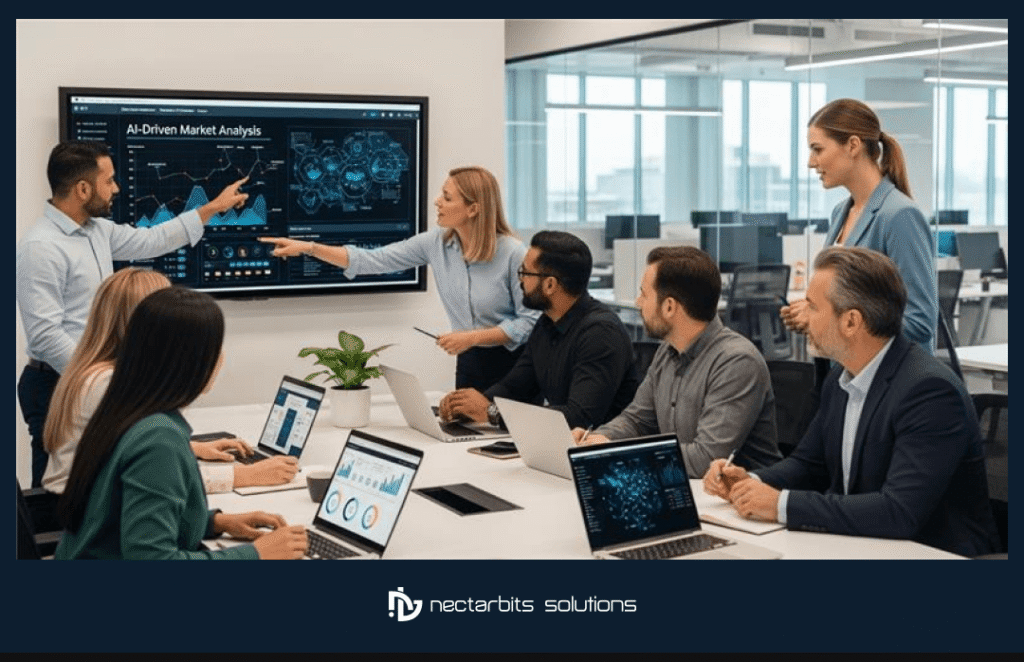
Mid-market firms are the backbone of Canada’s economy, typically employing 50–500 employees and generating $10 million to $1 billion in annual revenue. These businesses operate at a critical scale. large enough to manage complex operations, yet often without the financial flexibility, technical depth, or dedicated AI teams of large enterprises. This creates a growing gap between ambition and execution.
Key Challenges Facing Mid-Market Firms
Mid-market companies face several structural and operational barriers that slow digital progress:
- Limited resources: Lean IT teams and constrained budgets make it difficult to experiment with or scale advanced technologies.
- Rising competitive pressure: Larger enterprises increasingly use AI to automate processes, personalize customer experiences, and optimize decisions.
- Fragmented data systems: Data often exists across disconnected tools, limiting visibility and insight.
- AI skill gaps: In-house expertise in AI strategy, data science, and governance is often missing.
Why Traditional IT and Analytics Fall Short
Conventional IT systems and basic analytics tools were designed to report on past performance, not to drive real-time or predictive decision-making. Dashboards and reports can explain what happened, but they rarely answer why it happened or what to do next. Without a clear digital transformation strategy, technology investments remain siloed and underutilized. Organizations seeking comprehensive guidance can benefit from professional IT consulting services to bridge this gap.
AI as a Strategic Business Enabler
AI changes this dynamic by turning data into action. Through AI consulting, mid-market firms can apply AI where it delivers the most impact:
- Operational efficiency: Automating repetitive tasks and optimizing workflows
- Customer experience: Using generative AI for business to improve support, personalization, and response times
- Data-driven insights: Predictive analytics for forecasting, planning, and risk management
Despite growing interest, many Canadian mid-market firms struggle with AI adoption due to cost concerns, data readiness issues, and unclear ROI. AI consulting bridges this gap by identifying high-value use cases, preparing data foundations, and guiding implementation in manageable phases, allowing firms to modernize confidently and compete more effectively.
What Is Strategic AI Consulting?
Strategic AI consulting goes far beyond implementing AI tools or experimenting with automation. At its core, it is a business-led approach that combines deep industry understanding, data strategy, and AI expertise to help organizations achieve measurable outcomes. Instead of starting with technology, strategic AI consulting begins with business goals, growth, efficiency, customer experience, and risk management- and then identifies where AI can create the most value.
For mid-market firms, this distinction is critical. Many organizations invest in AI software or analytics platforms but struggle to see meaningful returns because initiatives are disconnected from broader business strategy. Strategic AI consulting closes this gap by aligning AI initiatives with a clear strategy roadmap, ensuring every investment supports long-term objectives rather than short-term experimentation.
Core Components of Strategic AI Consulting
A structured AI consulting engagement typically includes several key elements:
- AI maturity assessment: Evaluating current data quality, infrastructure, processes, and organizational readiness to determine where AI can realistically be applied.
- Use-case prioritization: Identifying and ranking AI opportunities based on business impact, feasibility, and ROI, rather than pursuing low-value or high-risk projects.
- AI strategy roadmap: Creating a phased implementation plan that outlines quick wins, pilot projects, and scalable initiatives aligned with the company’s digital transformation goals.
- Governance and ethics: Establishing frameworks for data security, compliance, model transparency, and responsible AI use.
Measurable Outcomes That Matter
The real value of strategic AI consulting lies in execution and results. Consulting-led AI initiatives focus on ROI modeling to justify investments and track performance over time. Risk mitigation is built into the process by addressing data privacy, regulatory compliance, and change management from the start. Most importantly, AI consultants provide hands-on execution support, ensuring strategies move from planning to production and adoption across teams.
By blending business strategy with AI expertise, strategic AI consulting enables organizations to implement AI with confidence, turning complex technology into a practical driver of competitive advantage and sustainable growth.
Core Services in AI Consulting
Strategic AI consulting is not a single service—it is a structured set of capabilities designed to help organizations adopt AI in a practical, scalable, and responsible way. For mid-market firms, these services ensure that AI initiatives are aligned with business goals, technically feasible, and supported by the organization. Below are the core services that define a comprehensive AI consulting engagement.
a. AI Readiness & Maturity Assessment
Before any AI initiative begins, organizations must understand where they stand. An AI readiness and maturity assessment evaluates whether a business is technically and operationally prepared to adopt AI successfully.
This assessment typically reviews:
- Data foundations: Data quality, availability, consistency, and accessibility across systems.
- Technology stack: Existing infrastructure, cloud readiness, integrations, and scalability.
- Talent and skills: Internal capabilities in data engineering, analytics, and AI management.
- Governance and security: Data privacy, compliance requirements, and risk controls.
This step is essential because AI projects often fail due to poor data quality, unclear ownership, or unrealistic expectations. A maturity assessment reduces risk by setting clear baselines and identifying gaps before investments are made.
b. Digital Transformation Strategy
A strong digital transformation strategy ensures AI initiatives support real business outcomes rather than isolated innovation efforts. AI consultants work with leadership teams to align AI investments with organizational priorities such as cost reduction, revenue growth, customer experience, or operational resilience.
Key elements include:
- Mapping AI initiatives to business objectives
- Defining success metrics and KPIs (e.g., productivity gains, cost savings, customer response times)
- Establishing data governance and ethical AI frameworks to ensure transparency and compliance
This strategic alignment ensures AI becomes part of the organization’s long-term roadmap, not a short-term experiment.
c. Generative AI Integration
Generative AI for business has become one of the most practical and high-impact applications of AI for mid-market firms. Consultants help organizations integrate generative AI tools securely and responsibly into everyday workflows.
Common use cases include:
- AI-powered customer service responses and virtual assistants
- Contract and document summarization for legal and procurement teams
- HR automation for job descriptions, onboarding materials, and internal knowledge bases
The focus is on controlled adoption, ensuring data security, accuracy, and relevance while improving speed and efficiency.
d. Custom AI & Machine Learning Solutions
For organizations with more complex needs, AI consulting includes custom AI and machine learning solutions tailored to specific business challenges. This involves end-to-end AI software development, from model design to deployment and optimization.
Typical solutions include:
- Predictive analytics for demand forecasting and risk assessment
- Intelligent process automation combining RPA with AI
- Custom recommendation or decision-support systems
These solutions are built to integrate seamlessly with existing systems and scale as the business grows. Organizations looking to expand their machine learning capabilities can benefit from specialized development partnerships.
e. Change Management & Training
Even the best AI strategy fails without adoption. Change management and training ensure that employees understand, trust, and use AI tools effectively.
This includes:
- Stakeholder communication and leadership alignment
- Employee training and digital skill development
- Organizational readiness planning and feedback loops
By focusing on people as much as technology, AI consulting ensures sustainable adoption and long-term success.
Practical AI Use Cases for Mid-Market Firms
AI is no longer a futuristic concept—it’s a practical tool that mid-market firms can leverage to drive efficiency, improve decision-making, and enhance customer experiences. By applying AI strategically, businesses can achieve measurable results while reducing operational costs. Below are some of the most impactful use cases for mid-market organizations.
a. Customer Service & Support Transformation
Customer expectations are higher than ever, and traditional support teams can struggle to respond quickly to inquiries. AI-powered virtual assistants and chatbots help organizations provide instant responses to common questions, escalate complex issues to human agents, and manage high ticket volumes efficiently. Creating intuitive interfaces through professional UI/UX design consulting services in Canada ensures these AI tools deliver seamless user experiences that drive adoption and satisfaction.
Real impact: Companies implementing AI-assisted support have reported up to 40% faster ticket resolution, improved customer satisfaction scores, and reduced staffing pressures. For mid-market firms, this allows teams to focus on complex, high-value interactions while AI handles repetitive queries.
b. Procurement & Contract Insights
Managing contracts, vendor relationships, and procurement processes can be time-consuming and prone to errors. Generative AI for business can automatically analyze contracts, flag risks, identify compliance issues, and extract key clauses for quicker decision-making.
Real impact: Firms using AI for procurement reporting and contract analysis can reduce manual review time by 50–70%, minimize legal risks, and streamline supplier negotiations, directly improving operational efficiency and cost control.
c. Human Resources Automation
Human resources departments often deal with repetitive tasks such as creating job descriptions, onboarding new hires, and analyzing employee performance data. AI tools can automate document creation, generate onboarding guides, and provide analytics for workforce planning.
Real impact: Mid-market companies leveraging AI in HR have seen faster onboarding cycles, better candidate-job fit, and improved employee engagement metrics, freeing HR teams to focus on strategic initiatives like talent development and retention.
d. Sales & Marketing Intelligence
AI can transform sales and marketing by analyzing large datasets to predict customer behavior, optimize campaigns, and personalize communications. Predictive lead scoring helps sales teams focus on high-probability prospects, while AI-generated insights allow marketing teams to tailor messages for maximum engagement.
Real impact: Firms integrating AI-driven sales and marketing have reported higher conversion rates, improved lead quality, and a measurable lift in campaign ROI, helping mid-market organizations compete effectively with larger players.
By strategically adopting AI in these areas, mid-market firms can unlock significant efficiency gains, reduce operational costs, enhance customer satisfaction, and make smarter data-driven decisions. Whether through generative AI for document automation or predictive analytics for sales, the measurable benefits make AI consulting a critical investment for sustainable growth.
Choosing the Right AI Consulting Partner in Winnipeg
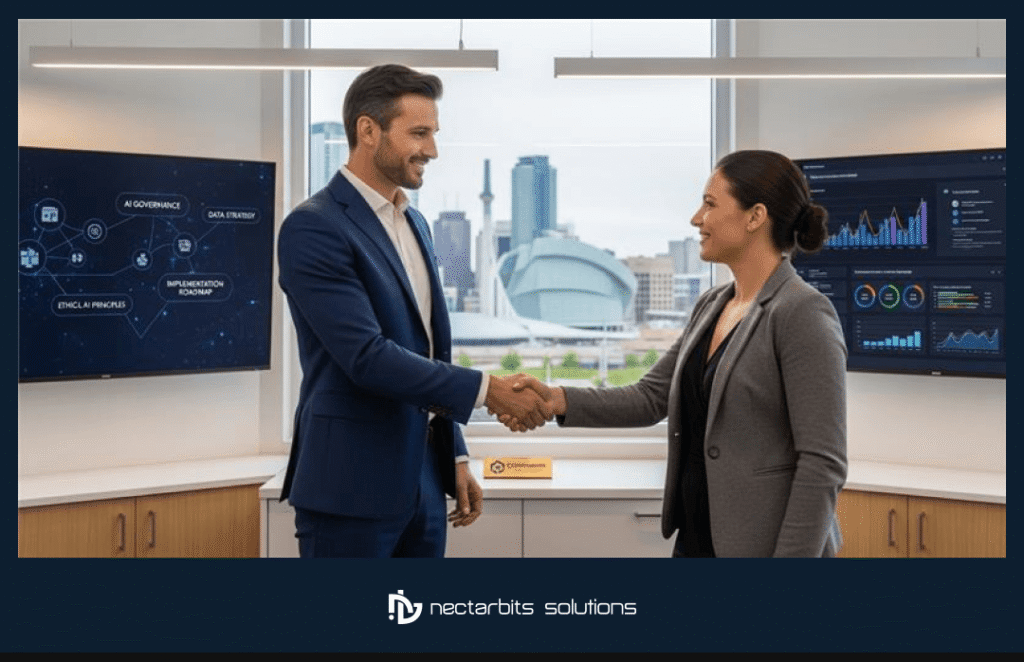
Selecting the right consulting partner is a critical step for mid-market firms looking to adopt AI successfully. In a market where technology moves fast and expectations are high, working with a trusted advisor can mean the difference between a successful AI transformation and costly missteps. For businesses in Manitoba, AI Consulting Winnipeg offers a local, tailored approach, but choosing the right partner requires careful evaluation.
1. Industry Expertise and Local Market Understanding
Not all AI consulting firms are created equal. Look for partners with experience in your specific industry, whether manufacturing, logistics, retail, healthcare, or professional services. A firm that understands the unique challenges, regulations, and competitive pressures of your sector can provide more actionable insights and practical solutions. Local market understanding is also crucial. Winnipeg-based consultants are better positioned to navigate regional business networks, labor considerations, and compliance standards.
2. Strategic vs. Tactical Focus
A strong consulting partner goes beyond implementing tools; they help you develop a strategic AI roadmap. This includes identifying high-value use cases, prioritizing initiatives, and aligning AI with broader business objectives.
While tactical services such as software deployment are important, the most impactful partners combine strategy with execution, guiding both planning and custom software development services in Canada.
3. Proven Track Record
Ask for evidence of past success. Reliable AI consultants will provide case studies, ROI analyses, and testimonials demonstrating tangible results. Mid-market firms should prioritize partners who have delivered measurable efficiency gains, cost savings, or revenue growth through AI initiatives. A proven track record reduces risk and sets realistic expectations for project outcomes.
4. Governance, Security, and Data Privacy
AI adoption involves handling sensitive business and customer data. A competent partner ensures adherence to data privacy laws, security standards, and ethical AI practices. They should provide frameworks for responsible AI use, protecting your organization from regulatory or reputational risks.
5. Ongoing Support and Scalability
AI is not a one-time project; it evolves with business needs. Choose a consulting partner that offers continuous support, model maintenance, and the ability to scale solutions as your company grows. Organizations building cloud-based solutions may also benefit from SaaS application development services in Canada to ensure their AI tools remain flexible and scalable. Long-term guidance ensures AI tools remain effective and aligned with evolving business strategies.
By carefully evaluating these factors, mid-market firms in Winnipeg can select an AI consulting partner who not only delivers technical expertise but also guides strategic transformation. The right partner transforms AI from a technology experiment into a sustainable competitive advantage, enabling businesses to grow smarter, faster, and more efficiently in an increasingly digital marketplace.
Roadmap: How Mid-Market Firms Should Implement AI
Implementing AI can seem complex, but mid-market firms can achieve success by following a structured, phased approach. A clear roadmap ensures that initiatives are aligned with business goals, risks are minimized, and measurable outcomes are delivered. Below is a practical roadmap that firms can follow.
| Phase | Key Activities | Expected Outcomes |
| Discovery & Assessment | Evaluate current data, technology, and workforce readiness; identify pain points and business objectives | Clear understanding of AI readiness and high-impact opportunities |
| Strategy & Prioritization | Align AI initiatives with organizational goals; define KPIs, ROI expectations, and governance frameworks | A focused AI strategy roadmap that prioritizes projects based on value and feasibility |
| Pilot Projects & MVPs | Launch small-scale AI pilots or minimum viable products (MVPs) to test use cases and validate assumptions | Proof of concept with measurable results, lessons learned, and reduced implementation risk |
| Scale & Integrate | Expand successful pilots across departments; integrate AI with existing systems and workflows | Operationalized AI solutions that deliver measurable efficiency, cost savings, or revenue growth |
| Continuous Optimization | Monitor AI performance, retrain models as needed, and adjust processes; provide ongoing training | Continuous improvement, adaptability to changing business needs, and long-term ROI |
Key Considerations
- Start small, scale smart: Pilots and MVPs reduce risk and allow for iterative learning before full-scale implementation.
- Focus on measurable outcomes: Define clear KPIs from the start to ensure ROI can be tracked.
- Align people and processes: Change management and training are essential to ensure adoption and maximize value.
- Monitor and improve continuously: AI is not static; models, data, and business needs evolve. Ongoing optimization ensures sustainable impact.
By following this phased approach, mid-market firms can implement AI confidently and strategically, turning technology into a long-term driver of efficiency, growth, and competitive advantage. A structured roadmap ensures that AI adoption is not just a project but a sustainable capability for future success.
For a deeper understanding of the technology trends driving business growth, read more about app development trends in Canada.
Measuring Success: Metrics Every Firm Should Track
Implementing AI is only valuable if its impact can be measured. For mid-market firms, tracking the right key performance indicators (KPIs) ensures that AI initiatives deliver tangible business outcomes and align with broader organizational goals.
1. Operational Efficiency Gains
AI enables faster decision-making, automates repetitive tasks, and optimizes workflows. Measuring improvements in process cycle times, task completion rates, and service delivery speed shows how AI reduces bottlenecks and enhances overall operational efficiency.
2. Cost Savings from Automation
Automation through AI, whether in customer support, HR, or procurement, directly reduces labor costs and operational overhead. Firms should track time saved per task, reduction in manual errors, and cost per transaction, linking these metrics to real-dollar savings to quantify ROI.
3. Revenue Lifts from AI-Enabled Insights
AI-driven analytics and predictive models help firms identify new opportunities, target high-value customers, and optimize pricing strategies. Tracking incremental revenue, lead conversion rates, and sales cycle improvements demonstrates how AI contributes to top-line growth.
4. Adoption Rates and Employee Productivity
Even the most advanced AI is ineffective without user adoption. Monitoring employee engagement with AI tools, usage frequency, and productivity improvements ensures that technology is embraced and utilized to its full potential. Companies may need to hire AI developers to ensure proper implementation and ongoing optimization.
5. Data Quality Metrics
AI decisions are only as good as the data behind them. Metrics such as data accuracy, completeness, consistency, and timeliness help organizations maintain trust in AI outputs and prevent errors that could impact business decisions.
By linking these KPIs to measurable outcomes, mid-market firms can calculate ROI, identify areas for improvement, and justify further investment in AI initiatives. Consistently tracking these metrics ensures that AI projects are not just experiments, but strategic tools for sustainable growth, efficiency, and competitive advantage.
Conclusion
In today’s fast-evolving digital landscape, mid-market firms in Canada cannot afford to treat AI as optional. Strategic guidance from expert AI consulting transforms AI from a technology experiment into a practical, results-driven business tool. From streamlining operations and improving efficiency to generating actionable insights and driving revenue, AI empowers organizations to compete smarter and grow sustainably.
At NectarBits, we specialize in helping Canadian mid-market businesses, including Winnipeg-based firms, unlock the full potential of AI. Our tailored services, from AI readiness assessments and strategy roadmaps to custom AI software development and generative AI integration, ensure that every initiative aligns with your business goals and delivers measurable ROI.
Take the first step toward AI-driven transformation today. Schedule a free consultation, join an AI readiness workshop, or request a strategic assessment with NectarBits’ team of experts. With the right guidance, your organization can modernize operations, enhance decision-making, and build a long-term competitive advantage. Don’t wait, make AI a cornerstone of your growth strategy with NectarBits AI Consulting Winnipeg.
Continue Your Journey:
Unlock your business’s full potential with custom software development. Learn how tailored technology solutions can streamline operations, enhance efficiency, drive innovation, and deliver measurable, long-term growth.
Explore real-world strategies that help organizations transform processes, optimize performance, and stay ahead in a competitive market.
FAQs:
1. What is AI consulting, and why do mid-market firms need it?
AI consulting helps businesses identify, plan, and implement AI solutions that align with strategic goals. Mid-market firms need it to improve efficiency, reduce costs, and gain a competitive advantage without overloading internal resources.
2. How can AI improve business operations in Winnipeg mid-market companies?
AI streamlines workflows, automates repetitive tasks, enhances customer service, and provides predictive insights, helping Winnipeg firms optimize operations and make smarter data-driven decisions.
3. What types of AI solutions can mid-market firms adopt?
Common solutions include generative AI for content and process automation, predictive analytics, custom AI software, and intelligent process automation combining RPA with AI.
4. How do I measure the success of AI implementation?
Success can be measured with KPIs like operational efficiency, cost savings, revenue growth, adoption rates, and data quality, linked directly to ROI.
5. How do I choose the right AI consulting partner in Winnipeg?
Look for local expertise, industry experience, a strategic approach with a roadmap, proven results, governance practices, and ongoing support for scalability and adoption.