
Many software projects fail not because the ideas are weak, but because they are never validated effectively. Misaligned expectations, unclear requirements, and technical hurdles often derail even the most promising concepts.
This is where prototype development solutions become a game-changer. Prototyping is more than a visual mockup; it’s a strategic, solution-driven approach that tests ideas early, gathers user feedback, and aligns teams before full-scale development begins.
By implementing effective prototype development solutions, businesses can reduce risks, save time, and optimize budgets. Prototypes improve collaboration between designers, developers, and stakeholders, ensuring that every feature aligns with real user needs, ultimately leading to more efficient custom software development services
In this blog, we’ll explore how structured prototyping not only addresses common software development challenges but also transforms innovative ideas into profitable, user-focused software products
What is Prototype Development?
In software development, prototype development refers to creating a preliminary version of a product that allows teams to visualize ideas, test functionality, and gather feedback before committing to full-scale development. It’s a crucial step that helps bridge the gap between conceptual design and a final product, reducing costly mistakes and ensuring that the software meets both user needs and business objectives.
Prototypes come in different levels of detail, each serving a specific purpose:
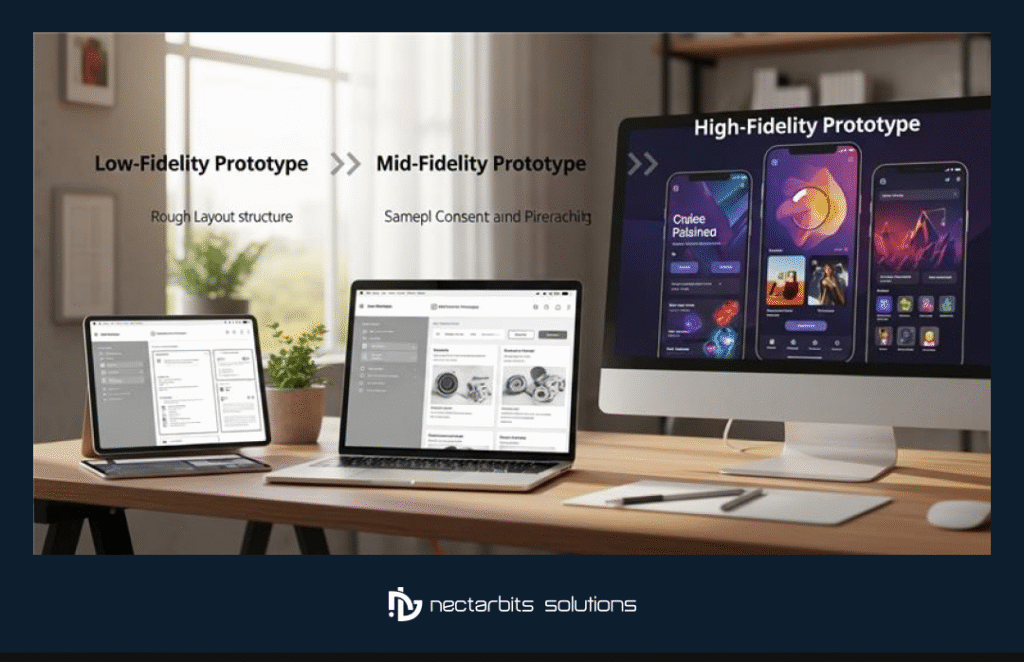
- Low-Fidelity Prototypes – These are simple wireframes that outline the basic structure and layout of the application. They focus on functionality and flow rather than design, making them ideal for early-stage ideation.
- Mid-Fidelity Prototypes – These clickable prototypes add more detail and interactivity, allowing teams and users to navigate through workflows. They help test usability and identify potential issues in navigation and feature placement.
- High-Fidelity Prototypes – These are interactive, visually polished models that closely resemble the final product. High-fidelity prototypes are used to validate design decisions, demonstrate the user experience to stakeholders, and guide the development team during implementation.
The primary purpose of prototyping is idea validation, usability testing, and stakeholder alignment. By building and testing prototypes, teams can identify design flaws, refine workflows, and ensure that the final software delivers value to users.
Implementing software prototyping best practices, such as iterative testing, early user feedback, and clear documentation, maximizes the benefits of software prototyping, including reduced development costs, faster time-to-market, and improved product quality.
In short, prototype development solutions provide a structured approach to validate concepts, align teams, and deliver software that meets real-world requirements efficiently and effectively.
Why Prototype Development Solutions are Essential
Software development is notoriously risky; a staggering 66% of software projects fail to meet their original goals, deadlines, or budgets due to unclear requirements, communication gaps, scope creep, and poor planning. (source). These challenges not only delay delivery but can significantly increase costs and erode stakeholder confidence before a line of code is even written.
This is where prototype development solutions become essential. Prototyping creates early, tangible representations of a product that teams can interact with, test, and refine long before full development begins. Instead of guessing what users want or building based on assumptions, teams validate ideas through prototypes, revealing usability issues, aligning expectations, and reducing risk. For instance, a mid‑fidelity prototype of a mobile interface can uncover confusing navigation patterns or missing features early, helping teams iterate before substantial development resources are committed.
By implementing software prototyping best practices, businesses not only catch problems early but also improve communication across design, engineering, and product teams. This collaborative clarity ensures that everyone works toward the same goals, reducing friction and eliminating costly rework. Teams that integrate UI/UX design consulting services into their prototyping workflow can further enhance user experience validation and design quality from the earliest stages.
Moreover, understanding prototyping challenges in development, such as choosing the wrong fidelity too early or avoiding feedback loops, helps teams refine their strategy and achieve better outcomes. Ultimately, effective prototyping accelerates time‑to‑market, optimizes budgets, and maximizes the benefits of software prototyping, from improved usability to stronger product‑market fit.
Common Challenges in Prototype Development
While prototype development solutions offer immense benefits, teams often encounter specific hurdles that can affect the effectiveness of the prototyping process. Understanding these prototyping challenges in development helps businesses address them proactively and ensure prototypes deliver real value.
1. Unclear Goals and Misaligned Objectives
One of the most frequent issues is starting a prototype without well-defined goals. Teams may have different interpretations of the product vision, which leads to wasted effort, conflicting designs, and delays. Misalignment between stakeholders, designers, and developers can result in prototypes that fail to validate the right ideas.
2. Over-Fidelity Too Early
Some teams invest in high-fidelity prototypes too soon, focusing on visuals and detailed interactions before the core functionality is validated. This approach consumes unnecessary resources and creates attachment bias, making it harder to pivot based on user feedback.
3. Lack of User Feedback
Prototypes are meant to test assumptions, but skipping early user testing is a common mistake. Without feedback, teams risk building features that don’t meet real user needs, leading to low adoption rates and potential project failure.
4. Poor Collaboration Across Teams
Effective prototyping requires close coordination between design, product, and development teams. When communication is weak, knowledge gaps emerge, resulting in inconsistent designs, repeated revisions, and slowed iteration cycles. Establishing clear software architecture services from the beginning can help create a solid technical foundation that guides prototype development and ensures scalability.
5. Misunderstanding Prototype vs. Final Product
Many stakeholders mistakenly treat prototypes as final products. This expectation can lead to disappointment when prototypes don’t have complete functionality or polished visuals, and may pressure teams to rush development prematurely.
Addressing these challenges involves adopting structured prototyping workflows, clear documentation, and iterative testing. By doing so, teams can reduce the risk of wasted effort, improve usability, and ensure prototypes are effective tools for validating ideas.
Properly tackling prototyping challenges in development ensures that prototypes serve their true purpose: aligning teams, validating concepts, and guiding the creation of successful, user-focused software products.
Want a deeper breakdown of real-world prototyping obstacles and practical fixes?
Explore our detailed guide on Common Challenges During Prototype Development & Their Solutions
Step-by-Step Prototype Development Solutions
A successful software product begins with a clear, structured approach to prototyping. Prototype development solutions help teams validate ideas, reduce risks, and streamline development. Here’s a step-by-step workflow to implement effective prototypes:
1. Discovery & Research
Start by understanding your users, competitors, and market. Conduct surveys, interviews, and competitor analysis to uncover pain points and opportunities. This research ensures your prototype addresses real user needs rather than assumptions. Tools like Miro or Notion help document insights and share them across teams.
2. Define MVP & Core Features
Focus on the minimum viable product (MVP) by prioritizing essential features. A strong MVP development strategy ensures prototypes test the most critical elements first, saving time and resources while validating your core idea. Avoid overloading the prototype with secondary features at this stage.
3. Create Low- and Mid-Fidelity Prototypes
Begin with low-fidelity wireframes to outline structure and basic functionality. Then move to mid-fidelity clickable prototypes to simulate interactions and workflows. Professional prototype development services can accelerate this process through tools like Figma, InVision, and Adobe XD, enabling rapid prototyping in software development and faster iterations.
4. Gather Feedback & Iterate
Share prototypes with users and stakeholders to gather actionable feedback. Conduct usability testing sessions to identify pain points and iterate designs accordingly. Iteration at this stage helps reduce costly mistakes during actual development and ensures alignment with user expectations.
5. High-Fidelity Prototype & Validation
After validating core functionality, create a high-fidelity prototype that mirrors the final product’s look and feel. Include realistic interactions, polished visuals, and detailed workflows. This step allows stakeholders to approve the design and confirms that the user experience meets expectations before development begins.
6. Handoff to Development Team
A seamless handoff ensures developers understand the intended functionality. Share annotated designs, specifications, and feedback from testing sessions. Tools like Zeplin or Figma’s handoff features simplify communication, reduce misunderstandings, and accelerate development.
Best Practices for Effective Prototyping:
- Keep prototypes purpose-driven and avoid unnecessary complexity.
- Test early and often to uncover usability issues.
- Maintain cross-team collaboration for alignment.
- Document decisions and iterations for transparency.
By following this structured, step-by-step prototype development workflow, teams can validate ideas faster, improve user satisfaction, and reduce development costs, transforming concepts into successful, market-ready software products efficiently.
Measuring the Success of Prototype Development
Measuring the success of prototype development solutions is crucial to ensuring that your efforts translate into profitable software products. By tracking key metrics, teams can identify what works, what needs improvement, and make data-driven decisions before full-scale development begins.
Key Metrics to Track:
- User Validation Rate: Measures the percentage of target users who find the prototype useful and aligned with their needs. A high validation rate indicates the prototype effectively solves user problems. For example, a recent study found that early user testing can prevent up to 50% of post-launch usability issues.
- Feature Adoption: Tracks how users interact with the core features of your prototype. This metric helps determine whether the most critical functionalities are intuitive and valuable. Features with low adoption rates may need redesign or removal before development, especially before moving into MVP development for startups.
- Time-to-Market Reduction: Prototyping accelerates product validation and development. Teams using structured prototypes often reduce development timelines by 20–30%, enabling faster market entry and competitive advantage.
- Cost Savings / ROI: By identifying issues early, prototypes prevent expensive rework and wasted resources. For instance, catching a usability flaw in a mid-fidelity prototype can save thousands in development costs compared to fixing it post-launch.
Tracking these metrics ensures that prototype development solutions are not just theoretical exercises but practical tools that guide profitable software development, reduce risk, and maximize return on investment.
Real-World Examples / Case Studies
Real-world outcomes clearly demonstrate why prototype development solutions are critical for successful software projects. Below are two contrasting scenarios that highlight the impact of structured prototyping on time, cost, and product quality.
Case Study 1: Failure Due to Skipping Prototyping
A mid-sized eCommerce startup rushed directly into development without creating wireframes or interactive prototypes. Requirements were discussed verbally, and developers began coding immediately.
Within three months, major usability issues surfaced — confusing navigation, complex checkout flow, and unclear product categorization. Fixing these issues required redesigning core features, resulting in:
- 30% budget overrun
- 2-month launch delay
- Increased developer rework
- Poor early user reviews after launch
The absence of early validation led to avoidable costs and damaged brand credibility. This is a common example of prototyping challenges in development, where skipping early testing increases long-term risk.
Case Study 2: Success with Structured Prototype Development Solutions
In contrast, a SaaS company developing a project management tool adopted a structured prototyping workflow. They began with low-fidelity wireframes, conducted usability testing, and iterated through mid- and high-fidelity prototypes before development. They also leveraged service management software to coordinate their development workflow and track iterations efficiently.
As a result, they achieved:
- 25% faster time-to-market
- Reduced development costs by identifying design flaws early
- Higher feature adoption post-launch
- Improved user satisfaction and retention
By validating assumptions early and aligning stakeholders through interactive prototypes, the company minimized risk and maximized ROI.
These examples show that investing in prototype development solutions directly impacts project efficiency, product quality, and long-term profitability, turning ideas into scalable, market-ready software with confidence.
4 Major Pitfalls to Avoid in Prototype Development
Even the best prototype development solutions can fail if common mistakes are not addressed early. Understanding these challenges helps teams follow software prototyping best practices and avoid costly setbacks, especially before transitioning into MVP development services. Below are the four most critical pitfalls in the prototyping process:
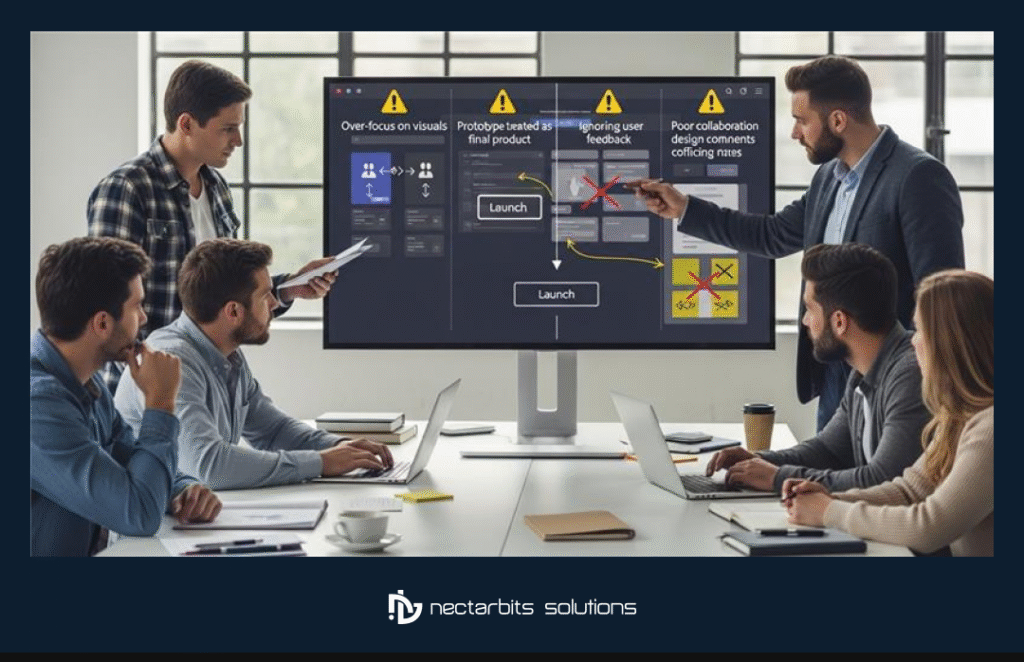
1. Over-Investing in Visual Design Too Early
Many teams jump directly into high-fidelity, polished designs without validating core functionality. While visuals are important, early prototypes should focus on structure, navigation, and user flow. Over-focusing on aesthetics can increase costs and delay meaningful testing.
2. Treating the Prototype as the Final Product
A prototype is a testing tool — not a production-ready solution. When stakeholders misunderstand this distinction, it creates unrealistic expectations and pressure to move into development prematurely. This confusion is one of the common prototyping challenges in development.
3. Ignoring Iterative User Feedback
Prototyping is meant to test assumptions. Skipping usability testing or failing to implement feedback defeats its purpose. Continuous iteration ensures the product evolves based on real user behavior rather than internal opinions.
4. Poor Cross-Team Collaboration
Successful prototyping requires alignment between designers, developers, and product managers. Weak communication leads to rework, inconsistencies, and delayed timelines. Clear documentation and shared tools like Figma improve transparency and collaboration.
Common Pitfalls & Their Impact
| Pitfall | Impact on Project | |
| 1 | Over-focus on visuals | Higher costs, delayed validation |
| 2 | Prototype seen as final product | Misaligned expectations |
| 3 | Ignoring feedback | Poor usability, low adoption |
| 4 | Weak collaboration | Rework and project delays |
Avoiding these mistakes ensures your prototype development solutions deliver measurable value and reduce long-term risk.
Future of Prototype Development
The future of prototype development solutions is being driven by intelligent automation, advanced analytics, and seamless collaboration tools. As businesses demand faster releases and higher-quality products, modern prototyping methods are evolving to support greater efficiency and profitability.
Key emerging trends include:
- AI-Assisted Prototyping
Artificial intelligence is transforming how prototypes are created, enabling AI-powered product prototyping that accelerates innovation. AI-powered design tools can automatically generate wireframes, suggest layout improvements, create reusable components, and even analyze user behavior patterns. This significantly reduces design time and supports faster concept validation. - Automated Usability Testing & Analytics
Modern prototyping platforms now integrate behavior tracking and heatmaps to monitor how users interact with designs. Automated insights help teams quickly identify friction points, improve user flows, and reduce post-launch usability issues. - Real-Time Collaboration & Cloud-Based Design
Tools like Figma and other cloud platforms allow designers, developers, and stakeholders to collaborate simultaneously. This improves transparency, accelerates feedback cycles, and minimizes communication gaps across distributed teams. - Deeper Integration with Agile & DevOps
Prototype development solutions are increasingly aligned with Agile methodologies, enabling continuous iteration, smoother handoffs to developers, and faster time-to-market.
By leveraging these advancements, organizations can build scalable, user-focused software while reducing costs and maximizing return on investment.
Conclusion
In modern software development, guessing is expensive. Prototype development solutions offer a structured approach to validate ideas, refine user experiences, and minimize costly rework before full-scale development commences. By identifying usability issues early, aligning stakeholders, and focusing on core features through MVP planning, businesses can minimize risk and accelerate time-to-market.
A well-executed prototyping workflow enhances product quality, manages budgets effectively, and increases the likelihood of market success. Instead of building based on assumptions, teams make informed, data-driven decisions that boost ROI and long-term profitability.
Adopting structured prototype development solutions is not just a design step; it’s a strategic investment in building scalable, user-focused software.
Continue Your Journey
Your prototype is just the first step toward building a successful digital product. While validation reduces risk and clarifies direction, true market success depends on executing the right MVP strategy. A well-planned MVP helps you prioritize core features, manage development costs, and launch with confidence.
If you’re ready to move beyond validation and transform your idea into a scalable, market-ready solution,
Explore the complete MVP journey for startups
FAQs:
1. What is prototype development in software engineering?
Prototype development in software engineering is the process of creating an early version or model of a software product to test concepts, validate features, and gather user feedback. It helps teams visualize functionality and user flow before full development begins, reducing uncertainty and improving clarity.
2. Why are prototype development solutions important?
Prototype development solutions are important because they minimize project risks, clarify requirements, and prevent costly mistakes. By validating ideas early, businesses can ensure stakeholder alignment, improve usability, and reduce scope creep, leading to faster and more efficient product development.
3. What are the main types of software prototypes?
The main types of software prototypes include low-fidelity wireframes, mid-fidelity clickable mockups, high-fidelity realistic simulations, and functional prototypes with limited working features. Each type serves a different purpose in validating design, usability, and functionality.
4. How does prototyping reduce software development costs?
Prototyping reduces development costs by identifying design flaws and usability issues before coding starts. Fixing problems during the prototype stage is significantly cheaper than making changes after full development or post-launch.
5. Is prototyping used in Agile development?
Yes, prototyping is widely used in Agile development because it supports iterative workflows, continuous feedback, and quick MVP validation. It helps Agile teams refine features efficiently and deliver user-focused software faster.